Guiding the Drill: How Javier Daniel Salcido is Elevating Gyroscopic Surveying in West Texas
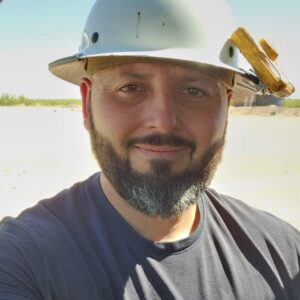
In the heart of Texas oil country, precision isn’t a luxury—it’s a requirement. With every well drilled in the Permian Basin, operators face a complex underground maze, where accuracy, safety, and efficiency collide. At the intersection of these priorities stands Javier Daniel Salcido, a respected expert from Odessa, Texas, who’s making waves in the drilling world through his mastery of gyroscopic survey technology.
A New Era in Directional Surveying
Directional drilling has come a long way from its early days, but magnetic-based surveying tools still have limitations—especially when operating near steel casing or magnetic anomalies. That’s where gyroscopic surveys come in.
A gyroscopic survey uses a spinning gyroscope to determine orientation, independent of the Earth’s magnetic field. This allows for highly accurate positioning of wellbores, even in environments where traditional tools fall short. For engineers and drillers, gyroscopic surveys are like having GPS for underground navigation—crucial when you’re steering a drill bit thousands of feet below the surface.
Javier Salcido explains, “When you’re working in high-interference zones or re-entering existing wells, gyro surveys aren’t just helpful—they’re the only reliable solution.”
Odessa Roots, Global Expertise
Salcido’s journey began right where the action is—Odessa, Texas, the unofficial capital of American oil production. Surrounded by rigs and pumping units from an early age, he developed a deep respect for the industry and the people who keep it running.
After starting his career as a field tech, Professional Javier Daniel Salcido Odessa Texas quickly moved into more specialized roles. He became known not only for his technical skill but also for his ability to problem-solve under pressure—an essential quality in the unpredictable world of downhole surveying. Over the past decade, he has become a leading advocate for gyroscopic technology, training crews, consulting on high-stakes wells, and helping operators maximize their drilling potential.
“Gyros can make or break a job,” Salcido says. “When clients need reliable data fast, they call me in.”
How Gyroscopic Surveys Work
At the core of a gyroscopic survey tool is a high-speed spinning mass that maintains a fixed orientation in space. As the tool is lowered into the borehole, sensors detect changes in inclination and azimuth. Unlike magnetic tools, which are influenced by surrounding metal and natural magnetism, gyros are immune to those disturbances.
There are two primary types of gyroscopic surveys:
- Memory Gyros: Run in memory mode, collecting data as they descend and storing it for retrieval later.
- Real-Time Gyros: Provide live data, allowing adjustments on the fly—a game-changer in directional drilling.
These tools are used during initial drilling, re-entries, sidetracks, and even during plug and abandonment operations, making them one of the most versatile assets on a rig.
On the Ground in the Permian Basin
The Permian Basin is one of the most competitive oil regions in the world, with wells spaced closer than ever before. Avoiding collisions while hitting tight geological targets requires pinpoint accuracy. Javier Salcido has been instrumental in helping operators navigate this complexity.
“One of the biggest challenges is maintaining trajectory in lateral sections,” he says. “Gyroscopic surveys help ensure we’re in the zone and staying on path, which directly impacts production.”
Salcido often works on multi-well pads where one miscalculation could compromise several million dollars of investment. His hands-on knowledge of local formations, combined with the precision of gyro data, gives clients a significant edge.
Overcoming Technical Challenges
Despite their benefits, gyroscopic tools aren’t foolproof. They require careful calibration, experienced handling, and an understanding of how downhole conditions—like temperature and vibration—can affect readings. Salcido emphasizes rigorous pre-job planning and tool maintenance.
“Too many people think you can just send a gyro down and get perfect data. That’s not how it works,” he warns. “Success comes from preparation and knowing how to adapt on site.”
His team often customizes tool setups based on the unique characteristics of each well. From depth tracking to data interpretation, Salcido has turned gyroscopic surveying into both an art and a science.
Looking Ahead: The Future of Subsurface Intelligence
As drilling technology evolves, so too does the role of downhole data. Salcido sees gyroscopic surveys becoming even more integrated with real-time drilling systems, automation, and digital well planning platforms.
“In five years, I think gyros will be standard on every high-value well,” he predicts. “We’re moving toward a future where accurate data isn’t just nice to have—it’s expected on every job.”
He also foresees growth outside the oilfield, in sectors like geothermal drilling, carbon capture wells, and even tunnel construction—industries that also require precise underground navigation.
A Local Pro Making a Global Impact
Though his work spans across the southwestern U.S. and beyond, Javier Daniel Salcido still calls Odessa home. He takes pride in training local talent and giving back to the community that launched his career.
“Odessa made me who I am,” he reflects. “I’ve been fortunate to work on cutting-edge projects, but I never forget my roots. There’s a lot of talent out here, and I love helping people break into the industry.”
Whether he’s on a rig site troubleshooting a downhole survey or back in town mentoring young technicians, Salcido continues to push the boundaries of what’s possible with gyroscopic technology.